
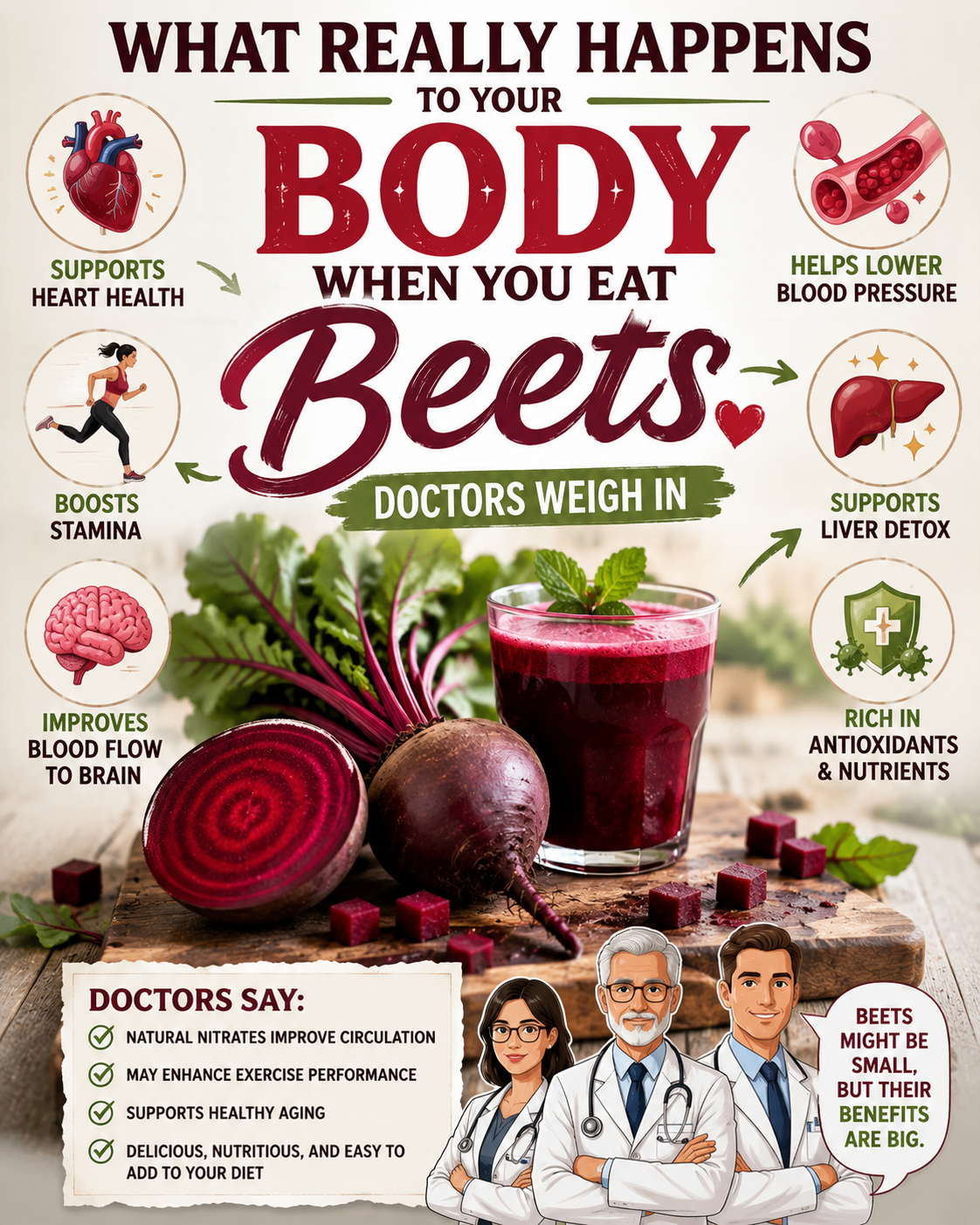
Beets get labeled a “superfood” so often the word has almost lost its meaning. But here’s the thing — in this case, the science actually backs up the hype. From your blood pressure to your brain, beets deliver real, measurable benefits that researchers and doctors keep returning to. At the same time, not every claim floating around wellness circles holds up to scrutiny.
So let’s separate fact from fiction. Here’s what genuinely happens inside your body when you make beets a regular part of your diet.
🔬 7 Real, Science-Backed Benefits of Eating Beets
1. Your Blood Pressure Can Drop — Within Hours Beets are exceptionally rich in dietary nitrates. Once consumed, your body converts these nitrates into nitric oxide, a compound that relaxes and dilates blood vessels. The effect is fast: research shows that a single 250ml glass of beet juice can reduce systolic blood pressure by as much as 4–10 mmHg within just 3 to 6 hours. It won’t replace medication — but as a daily dietary habit, it’s one of the most powerful natural complements to blood pressure management available.
2. Your Athletic Performance Gets a Meaningful Edge The same nitric oxide that benefits your heart also improves how efficiently your muscles use oxygen during exercise. Studies involving cyclists showed they rode measurably faster and consumed less oxygen after drinking beet juice before a time trial. The benefit extends to runners, swimmers, and older adults alike. For best results, eat beets 2 to 3 hours before training.
3. Your Brain Works Better — Especially as You Age Nitric oxide doesn’t just reach your muscles — it increases blood flow to the frontal lobe, the region of the brain responsible for decision-making, focus, and working memory. In one notable study, older adults who consumed beet juice showed brain activity patterns that closely resembled those of much younger participants. Whether you’re a student heading into exam season or simply want to stay sharp with age, this is a compelling reason to add beets to your plate.
4. Inflammation in Your Body Decreases Beets owe their striking deep-red color to a group of antioxidants called betalains. These compounds actively fight oxidative stress and have been shown to reduce markers of chronic inflammation — the kind quietly linked to conditions like arthritis, heart disease, and certain cancers. One important note: cooking breaks down betalains. Raw, roasted, or freshly juiced beets preserve the most antioxidant activity.
5. Your Gut Becomes Healthier A single cup of beets provides 3.4 grams of dietary fiber — valuable fuel for the beneficial bacteria living in your digestive tract. A thriving gut microbiome has far-reaching effects: stronger immunity, better mood regulation, improved metabolic health, and more stable blood sugar levels. Beets quietly support all of it.
6. Your Liver Gets Natural Support Betalains also play a role in supporting your liver’s detoxification pathways — specifically the enzymes responsible for identifying and eliminating harmful compounds. While most of the current data comes from animal studies, the direction of the research is promising. The key takeaway: beets support your body’s own built-in detox system. No expensive cleanse required.
7. You Get a Dense Hit of Essential Nutrients One cup of cooked beets delivers folate (37% of your daily needs), manganese (22%), potassium (11%), and a useful dose of iron. These nutrients collectively support cell repair, bone health, nerve function, and healthy red blood cell production — all from a single humble vegetable.
⚠️ The Claims That Don’t Hold Up
Not everything said about beets is grounded in evidence. Here’s a quick reality check:
- “Beets cure cancer” — Betalains show anti-cancer activity in laboratory settings, but there is no evidence they cure cancer in humans. Don’t conflate lab research with clinical outcomes.
- “Beet juice melts fat” — Beets are low in calories, but juicing removes the fiber and can cause blood sugar spikes. Whole beets are far better for weight management than juice.
- “Beets cleanse your kidneys” — Beets support kidney function through their antioxidant content, but the idea that they “flush” toxins has no scientific basis.
- “Eat beets for glowing skin” — Healthy skin is the result of overall nutrition, sleep, and hydration. Beets contribute, but they’re not a shortcut.
🚨 A Few Things Worth Knowing Before You Start
Beeturia — Up to 14% of people notice pink or red discoloration in their urine or stool after eating beets. It’s completely harmless, but it can be alarming if you don’t know it’s coming.
Kidney stone risk — Beets are high in oxalates. If you have a history of calcium-oxalate kidney stones, it’s worth moderating your intake and speaking with your doctor.
Low blood pressure — If you already have hypotension, the blood-pressure-lowering effect of beets could work against you. Check with your healthcare provider before making beet juice a daily habit.
Medication interactions — Beets may amplify the effects of blood pressure medications or certain other drugs. When in doubt, ask your doctor.
💡 How to Get the Most Out of Beets
Raw — Grate into salads or blend into smoothies for maximum nitrate retention. Roasted — Toss with olive oil, salt, and fresh herbs at 200°C (400°F) for 35–45 minutes. The natural sugars caramelize into something extraordinary. Juiced — Combine with apple, fresh ginger, and lemon for a drink that’s actually enjoyable. In soup — Borscht, the classic Eastern European beet soup, is one of the most nutrient-rich comfort foods in existence.
Pro tip: Pair beets with a vitamin C source — lemon juice, orange segments, or bell pepper — to significantly boost nitrate absorption.
The Bottom Line
Beets aren’t magic, and they won’t single-handedly transform your health overnight. But they are one of the most efficient, nutrient-dense, and genuinely well-researched vegetables you can put on your plate. Add them to your salad. Roast a batch for the week. Blend them into hummus.
Your heart, your brain, and your body will notice — not dramatically, not instantly, but consistently, and in ways that genuinely matter.
Real wellness isn’t built on superfoods. It’s built on real food, eaten with intention.